Japan Looks to AI for an Unprecedented Demographic Challenge
In the heart of Tokyo’s Otemachi district, far below the city’s crowded streets and towering office buildings, an experiment is underway that reflects one of Japan’s most urgent economic questions: can artificial intelligence help a society with fewer workers continue to thrive?
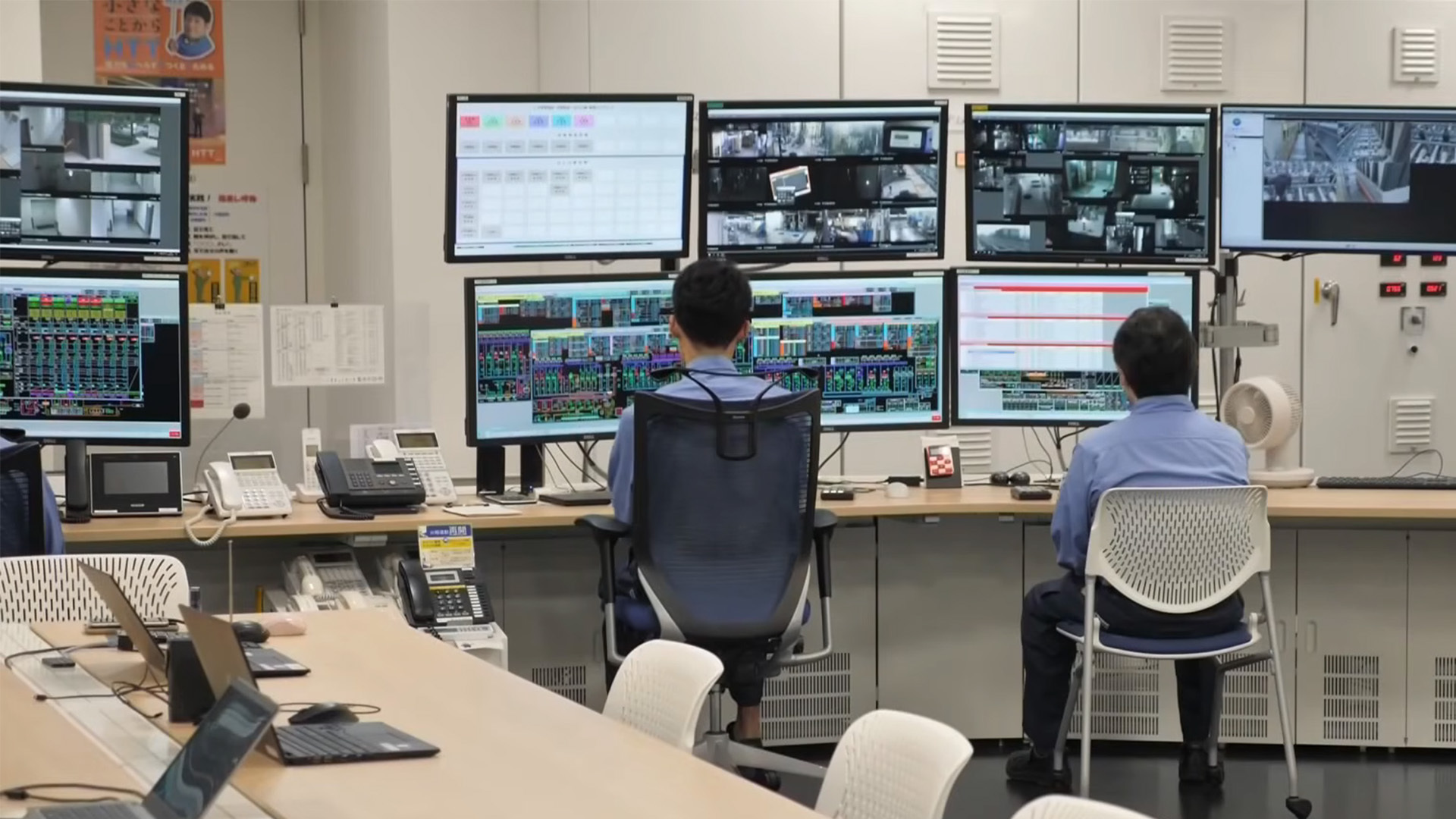
Deep underground, Marunouchi Heat Supply Company operates a vast network of heating and cooling pipelines stretching across one of Tokyo’s most important business areas. The 30km system provides essential services for offices, commercial buildings and transportation facilities. Managing such a complicated network requires years of technical knowledge, careful monitoring and experienced engineers who understand how the system behaves in different conditions.
Now, the company is introducing artificial intelligence as a way to support those workers and prepare for a future where experienced employees are increasingly difficult to replace. The project uses PlantPilot, an AI system developed with Tokyo-based technology company Preferred Networks. By studying historical operating data and analysing information from sensors across the infrastructure, the system can make recommendations designed to improve efficiency and support human decision-making.
The project is expected to move towards more automated operations by 2027, but the purpose is not simply to remove people from the process. Instead, the company sees AI as a tool that can preserve knowledge, assist engineers and help transfer decades of experience to a new generation.

Preserving Skills as Experienced Workers Retire
Japan’s ageing population has created pressure across many parts of the economy. Industries including manufacturing, logistics, energy and healthcare are facing a growing shortage of skilled workers. As older employees retire, companies are confronting the possibility that valuable expertise built over decades could disappear.
For Marunouchi Heat Supply, this challenge is especially significant because operating complex infrastructure depends heavily on practical experience. Engineers often develop an understanding of systems that goes beyond manuals and technical documents. They learn how equipment reacts, how problems develop and how to make decisions during unusual situations.
Hidetaka Yagi, assistant general manager of the company’s Development and Engineering Department, described securing skilled personnel as one of the organisation’s biggest challenges. He explained that AI could help protect operational knowledge by capturing expertise and making it available to future workers.
This approach reflects Japan’s broader attitude towards automation. While some countries worry that artificial intelligence will mainly replace human labour, Japan is increasingly presenting AI as a partner that can extend human abilities. The goal is to combine the judgement and experience of people with AI’s ability to analyse large amounts of information quickly.
Rather than eliminating engineers, systems like PlantPilot are designed to give workers better tools for making decisions. In an ageing society, where maintaining productivity is becoming more difficult, this relationship between humans and technology could become increasingly important.
A Search for a New Role in the Global AI Race
Japan’s AI ambitions are not limited to improving existing industries. The country is also trying to rebuild its influence in a global technology competition dominated by the United States and China.
Although Japan has long been recognised as a technology leader, particularly in areas such as robotics, manufacturing and engineering, it has struggled to create a large number of globally influential digital companies. The gap between Japan’s reputation for innovation and its modern start-up ecosystem has become a concern for policymakers and business leaders.
The United States has produced hundreds of private technology companies valued at more than $1bn, while China has also developed a large group of high-value start-ups. Japan, by comparison, has created far fewer companies of this scale. This has encouraged the country to rethink how it approaches artificial intelligence and digital innovation.
One company attracting attention is Sakana AI, a Tokyo-based artificial intelligence start-up that has expanded rapidly. The company has moved from research into commercial applications, developing products including Sakana Chat, Sakana Marlin and Sakana Fugu.
Ren Ito, chairman of Sakana AI, argues that Japan should not attempt to copy Silicon Valley’s approach directly. Instead, he believes Japan needs to develop its own model by focusing on practical applications, attracting talented researchers and creating different approaches to innovation.
Solving Real Problems Instead of Building Bigger Models
The development of advanced artificial intelligence systems requires enormous investment. Major American technology companies are spending heavily on computing infrastructure, research and large-scale AI models. Competing directly in that race would require resources that Japan may find difficult to match.
Instead, Japanese companies are exploring another path: using AI to solve specific real-world problems. This strategy builds on Japan’s existing strengths in industries such as energy, manufacturing and healthcare, where technology can be integrated into established systems.
The idea is that AI leadership does not only come from creating the largest models or spending the most money. It can also come from applying technology effectively in areas where it creates measurable improvements.
Japan’s experience with an ageing population gives it a unique challenge but may also provide an opportunity. If AI can help hospitals manage resources, factories maintain production, infrastructure operate efficiently and companies preserve expertise, Japan could create a model for other ageing societies facing similar pressures.
Government Investment and the Need for Talent
The Japanese government has placed artificial intelligence at the centre of its economic strategy. Tokyo plans to encourage large-scale public and private investment by 2040, targeting areas including AI, semiconductors and advanced research.
However, money alone may not solve Japan’s technology challenges. The country also faces difficulties involving research funding, competition for skilled workers and the need to strengthen universities and scientific institutions.
Building a successful AI ecosystem requires more than powerful computers and corporate investment. It depends on researchers, engineers, entrepreneurs and the next generation of innovators who can develop new ideas and turn them into practical solutions.
For Japan, the AI transformation is therefore both a technological project and a social one. The country is attempting to respond to demographic decline while creating a new foundation for economic growth.
An Experiment With Global Implications
Japan’s ageing society is one of the most visible examples of a demographic trend affecting many countries around the world. As populations grow older and workforces shrink, governments and businesses are searching for ways to maintain productivity without relying solely on increasing labour numbers.
Artificial intelligence will not provide a complete answer to Japan’s economic challenges. It cannot replace every skill, solve every labour shortage or remove the need for human creativity and judgement. But it is becoming an important part of the country’s response.
From underground energy networks in Tokyo to ambitious AI start-ups, Japan is testing whether technology can transform a difficult demographic reality into an opportunity for reinvention. The success or failure of this experiment may offer lessons not only for Japan, but for other societies preparing for a future shaped by ageing populations and rapid technological change.