Tesla’s ambition to build a large-scale fleet of humanoid robots is facing some of its toughest engineering challenges yet. CEO Elon Musk recently highlighted two major obstacles slowing the development of Optimus: creating highly capable robotic hands and establishing a supply chain for a product unlike anything Tesla has manufactured before.
During Tesla’s financial report meeting, Musk described Optimus as an extremely complex engineering project and acknowledged that many of the problems involved have never been solved at industrial scale. While he remains highly confident in the robot’s future potential, he emphasized that transforming a humanoid machine into a reliable, useful, and mass-produced product requires breakthroughs in multiple areas.
Musk has repeatedly positioned Optimus as one of Tesla’s most important future products. However, his latest comments show that even a company experienced in electric vehicles, artificial intelligence, and advanced manufacturing must overcome fundamental challenges before humanoid robots can become common in factories and everyday environments.
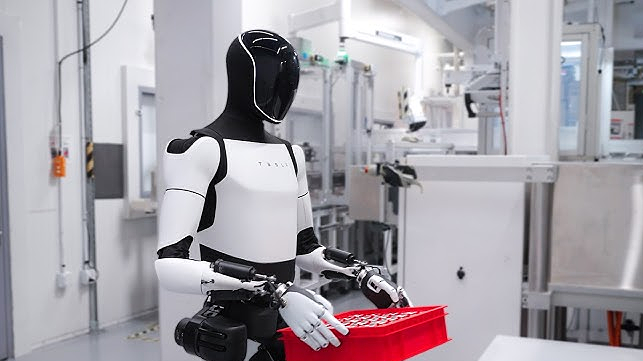
The Difficulty of Creating Human-Like Robotic Hands
One of the biggest challenges for Optimus is developing hands that can match the flexibility and precision of human hands. Musk explained that the human hand is an extraordinary biological system, and the more researchers study it, the more complicated it becomes to replicate through mechanical engineering.
According to Musk, a robotic hand is not simply a matter of copying the shape of fingers or adding movement functions. Human hands contain a remarkable combination of strength, coordination, sensitivity, and adaptability. The ability to grip different objects, adjust pressure, and perform delicate tasks comes from a complex interaction between muscles, joints, nerves, and the brain.
Tesla wants Optimus to eventually achieve human-level dexterity and potentially exceed human abilities in certain areas. However, creating a machine that can safely and consistently perform a wide range of movements remains a significant technical challenge.
The issue has been discussed by Musk before. He has previously said that a useful humanoid robot requires an exceptional pair of mechanical hands. The challenge is not only designing the hardware but also ensuring that the hands work smoothly with the robot’s artificial intelligence systems.
A Supply Chain That Does Not Exist Yet
The second major obstacle is the lack of an established supply chain specifically designed for humanoid robots. Unlike electric vehicles, which rely on a growing global ecosystem of batteries, motors, electronics, and automotive parts, humanoid robots require many specialized components that are still developing.
Musk said Tesla is effectively building much of the production system from the ground up. The company needs new manufacturing processes, specialized components, and additional production capacity for robotic parts. This makes Optimus one of the most difficult products Tesla has ever attempted to manufacture.
The challenge extends beyond physical components. Tesla must also manage advanced computing requirements, including artificial intelligence chips, memory systems, software logic, and packaging solutions. Many of these technologies were originally developed for Tesla’s electric vehicle business, but Optimus requires different capabilities and new approaches.
A humanoid robot combines mechanical engineering, artificial intelligence, sensors, software, and manufacturing in a single product. Every part must work together reliably, which creates a level of complexity different from producing traditional vehicles.
Tesla’s Ambitious Production Goals
Despite the difficulties, Musk remains confident that Tesla can eventually produce Optimus at a massive scale. He has said he would be surprised if Tesla fails to reach production of 100,000 robots per month within five years.
Tesla has already increased its focus on humanoid robots. The company has indicated that it is investing heavily in capital projects to accelerate Optimus development and prepare for future manufacturing. Musk has also said that the company is prioritizing robot production as a major part of Tesla’s long-term strategy.
The Optimus project began publicly in 2021, with the first prototype introduced in 2022. The robot has continued evolving through multiple versions, with Tesla working on improvements in movement, artificial intelligence, and hardware performance.
The latest generation of Optimus is designed as a human-sized robot, with Tesla developing its own AI technology to support control and interaction. The company envisions a future where humanoid robots can perform useful tasks in factories and potentially assist people in other environments.
The Broader Vision Behind Optimus
For Musk, Optimus represents more than another Tesla product. He believes humanoid robots could become a major technology shift comparable to electric vehicles and autonomous driving. The long-term vision is that robots could take on repetitive, dangerous, or physically demanding tasks.
However, reaching that future depends on solving practical problems that go far beyond demonstrations and prototypes. A successful commercial robot must be affordable, safe, durable, easy to maintain, and capable of operating reliably in real-world conditions.
The challenges Musk described highlight the difference between creating a working robot and creating millions of robots. A prototype can demonstrate impressive abilities, but mass production requires consistency, supply networks, manufacturing efficiency, and years of refinement.
The Road Ahead for Tesla’s Humanoid Robot
Tesla plans to move toward production and commercialization of Optimus, but the company’s own leadership acknowledges that significant work remains. The development of advanced robotic hands and a complete manufacturing ecosystem will likely determine how quickly the project can progress.
Optimus represents one of Tesla’s most ambitious attempts to expand beyond electric vehicles. If successful, it could reshape how industries approach automation and human-machine cooperation. But before that vision becomes reality, Tesla must overcome some of the hardest engineering and production problems in modern robotics.
The journey of Optimus demonstrates that building a humanoid robot is not only a software challenge or a mechanical challenge. It is a combination of both, requiring breakthroughs across design, artificial intelligence, manufacturing, and supply chain management.