
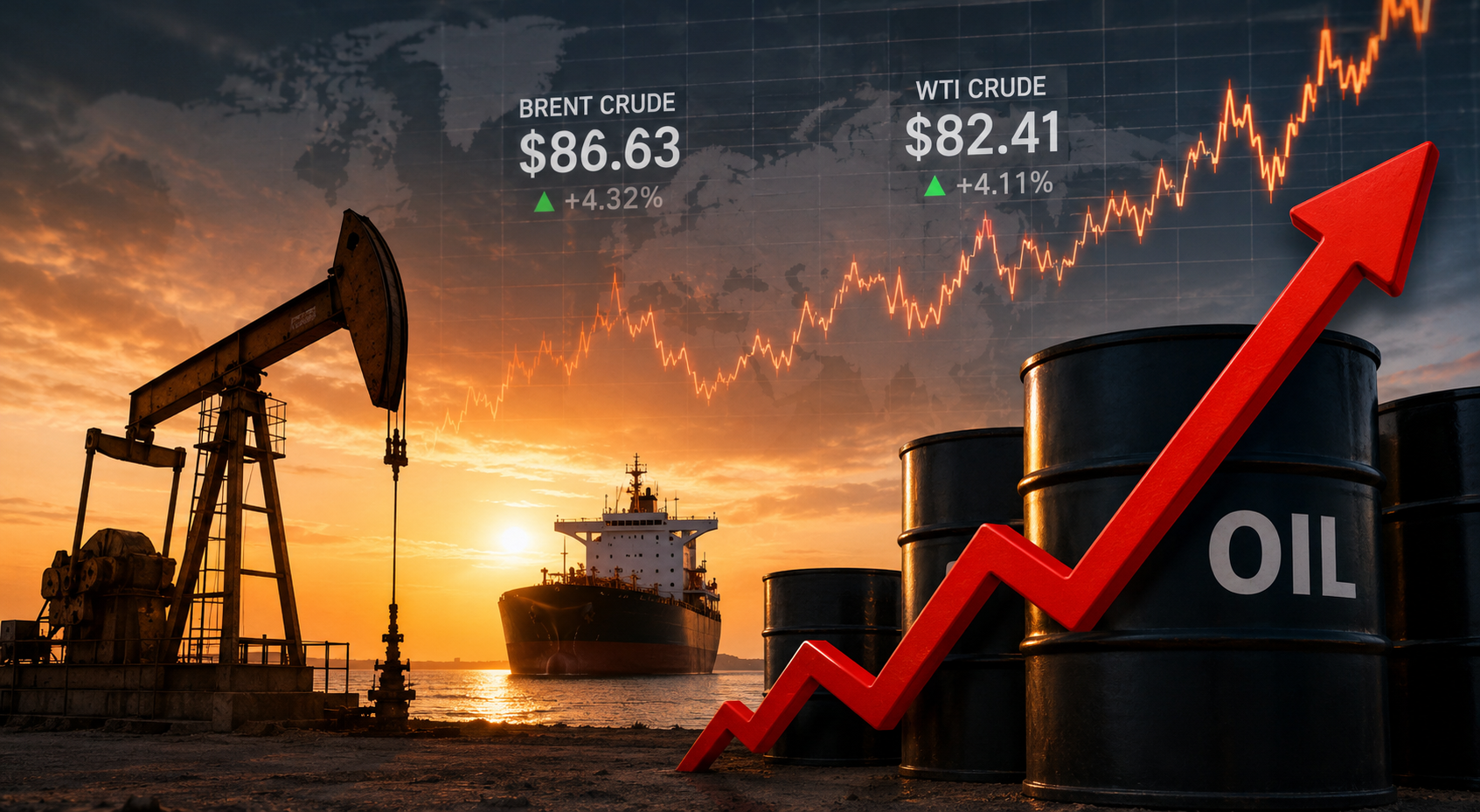
July 18, 2026 – Global oil markets experienced significant volatility this week as crude oil prices surged to their highest levels in more than a month. The sharp increase was driven primarily by escalating geopolitical tensions in the Middle East, raising concerns about potential disruptions to global energy supplies. Investors, governments, and businesses around the world are closely monitoring developments, as fluctuations in oil prices continue to have far-reaching consequences for the global economy.
Rising Geopolitical Risks
The latest surge in oil prices follows renewed tensions involving the United States and Iran, which have increased uncertainty across the Middle East. The region is home to some of the world's largest oil-producing countries and accounts for a significant share of global crude exports.
One of the biggest concerns for energy markets is the Strait of Hormuz, a narrow waterway connecting the Persian Gulf to the Gulf of Oman and the Arabian Sea. Approximately one-fifth of the world's traded oil passes through this strategic maritime route every day. Any military conflict, shipping disruption, or security threat in this area can immediately impact global oil supplies.
Although no major interruption to oil shipments has been confirmed, investors have reacted cautiously. Energy traders often price in future risks before actual supply shortages occur, leading to sharp price movements whenever geopolitical uncertainty increases.
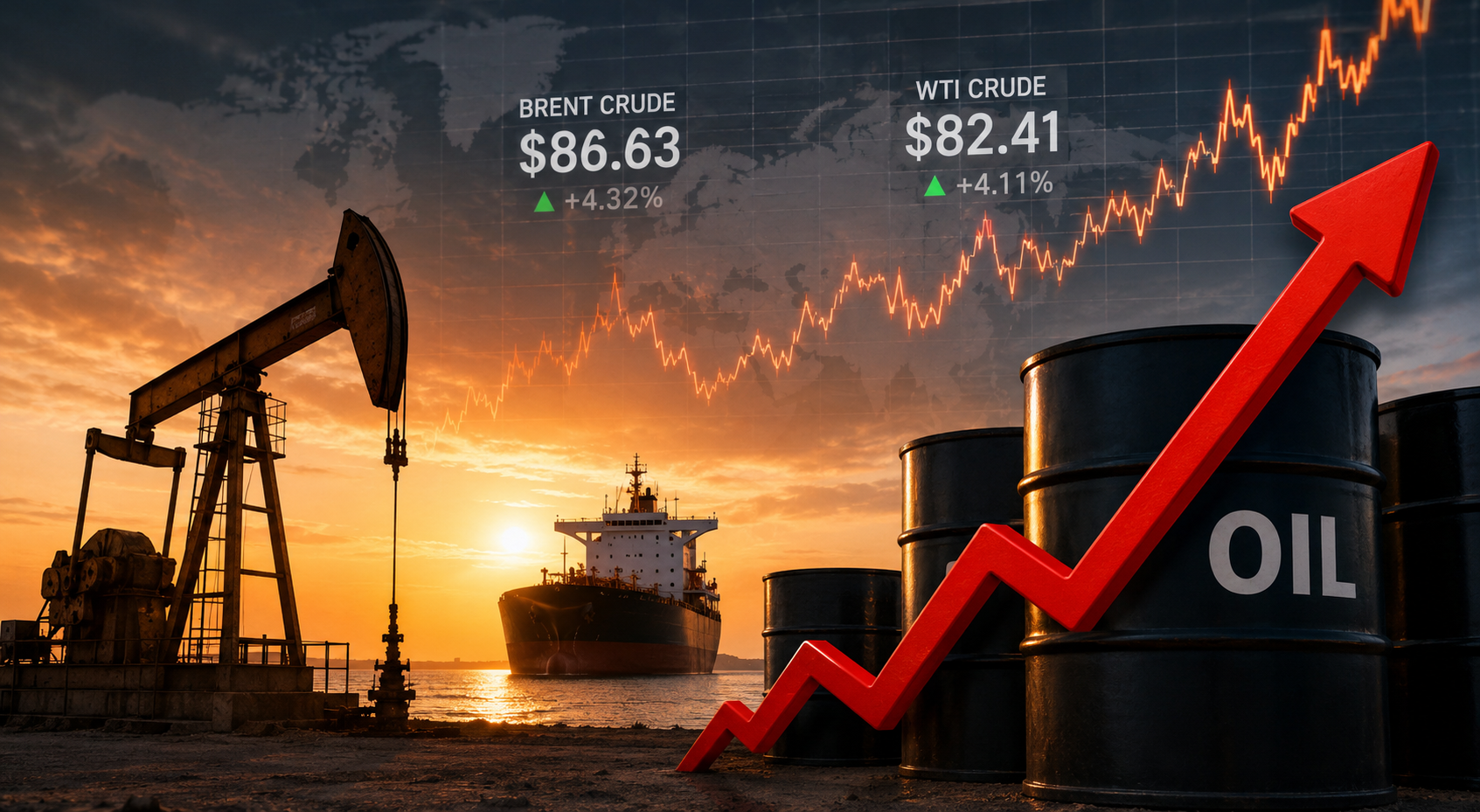
Oil Prices Climb Sharply
During the latest trading sessions, both Brent crude and West Texas Intermediate (WTI) crude oil posted strong gains. Brent crude, the international benchmark, rose by nearly 5 percent, while WTI also recorded significant increases.
Financial analysts attribute the rally to several interconnected factors:
Growing concerns over supply disruptions in the Middle East.
Increased demand for safe-haven investments during periods of geopolitical uncertainty.
Expectations that global oil demand will remain strong throughout the second half of the year.
Market speculation that major oil-producing countries may limit production growth to stabilize prices.
Commodity markets are known for reacting quickly to political developments. Even rumors of conflict or transportation difficulties can trigger immediate buying activity as traders seek to protect themselves against future supply shortages.
Impact on the Global Economy
Higher oil prices affect far more than just fuel costs. Because petroleum products are used throughout modern economies, rising energy prices can create inflationary pressure across multiple industries.
Transportation companies face higher fuel expenses, increasing the cost of shipping goods worldwide. Airlines often experience rising operating costs, which may eventually lead to more expensive airfares. Manufacturing industries that rely heavily on petroleum-based products also encounter higher production costs, forcing some businesses to increase prices for consumers.
As transportation and manufacturing expenses rise, everyday products—from groceries and clothing to electronics and household goods—can become more expensive. Consequently, sustained increases in oil prices may contribute to higher inflation worldwide.
Challenges for Central Banks
Persistent increases in energy prices also present challenges for central banks. Many countries have spent the past several years trying to reduce inflation through higher interest rates and tighter monetary policies.
If oil prices continue climbing, inflation could remain above central bank targets for longer than expected. Policymakers may therefore delay interest rate cuts or even tighten monetary policy further if inflation accelerates again.
Higher borrowing costs can slow economic growth, reduce consumer spending, and discourage business investment. As a result, energy market instability often influences not only commodity prices but also financial markets, employment, and overall economic performance.
Effects on Oil-Producing and Oil-Importing Nations
Oil price increases affect countries differently depending on whether they produce or import crude oil.
Major oil exporters such as Saudi Arabia, the United Arab Emirates, Iraq, and Norway generally benefit from higher prices because their export revenues increase. Governments in these countries often receive additional income that can support public spending and economic development.
In contrast, oil-importing nations—including many Asian and European economies—typically face greater economic pressure. Higher import bills increase production costs, widen trade deficits, and place additional strain on government budgets, particularly where fuel subsidies exist.
Developing economies are often more vulnerable because rising fuel costs directly affect transportation, food prices, electricity generation, and industrial production.
Impact on Vietnam
Vietnam, like many developing economies, closely follows global oil market developments. Although domestic fuel prices are regulated through periodic government adjustments, international crude oil prices remain a key factor influencing retail gasoline and diesel prices.
If global oil prices remain elevated over the coming weeks, Vietnamese consumers and businesses may experience higher transportation costs and increased prices for various goods and services. Industries such as logistics, fisheries, agriculture, aviation, and manufacturing could face additional financial pressure due to rising fuel expenses.
The government is expected to continue monitoring international market conditions while implementing appropriate measures to stabilize domestic fuel supplies and minimize inflationary impacts.
Investor Sentiment
Beyond physical supply and demand, market psychology plays an important role in determining oil prices. Investors closely monitor political statements, diplomatic negotiations, military activities, and shipping data to assess future risks.
Financial institutions have warned that continued uncertainty in the Middle East could keep oil prices volatile throughout the coming months. Conversely, signs of diplomatic progress or easing tensions could quickly reverse recent price gains.
Market participants are also watching production decisions by major oil-producing countries, economic data from China and the United States, and global fuel demand forecasts, all of which influence long-term price trends.
Outlook
Looking ahead, the direction of global oil prices will largely depend on geopolitical developments and supply conditions. If tensions in the Middle East ease and shipping through the Strait of Hormuz continues without disruption, oil prices may stabilize or gradually decline.
However, any escalation involving regional conflicts, sanctions, or attacks on critical energy infrastructure could tighten global supplies and push prices significantly higher. Such a scenario would likely increase inflationary pressures, slow economic growth, and create additional uncertainty across international financial markets.
Conclusion
The recent surge in global oil prices serves as a reminder of how interconnected the world's energy markets have become. Political events occurring in one region can rapidly influence fuel prices, transportation costs, inflation, and economic growth across continents.
As governments, businesses, and consumers navigate an increasingly uncertain global environment, maintaining stable energy supplies will remain a critical priority. Investors and policymakers alike will continue to monitor developments in the Middle East, recognizing that the future direction of oil prices will play a significant role in shaping the global economic outlook throughout the remainder of 2026.