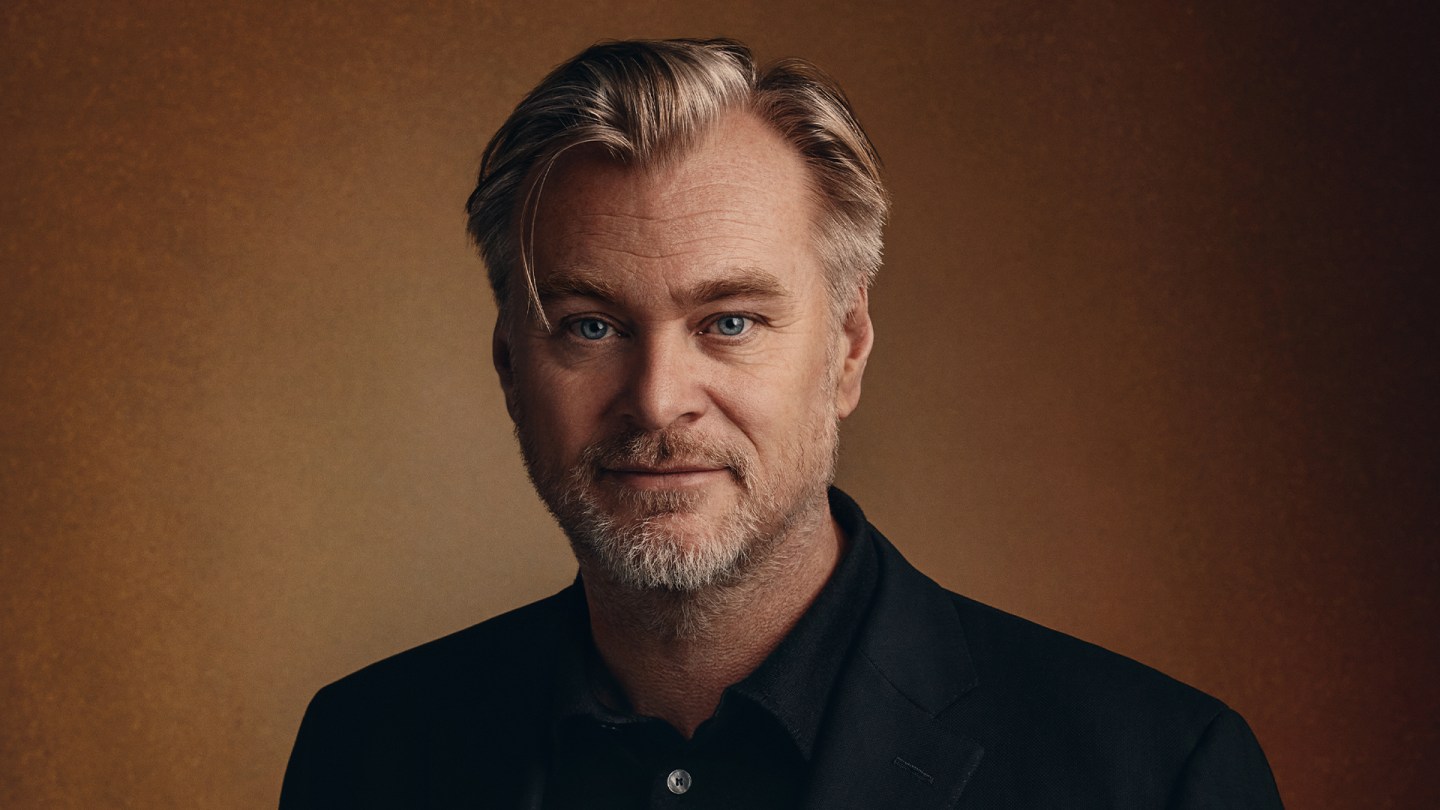
Christopher Nolan’s journey into the world of Homer’s The Odyssey has become one of the most ambitious chapters of his filmmaking career. The director, known for combining large-scale spectacle with philosophical questions, approached the ancient Greek epic not only as a legendary adventure but also as a story filled with fear, memory, regret, and the search for home.
In discussing the film, Nolan explained that The Odyssey connected with ideas he had explored throughout his career. Although the project is rooted in mythology, he discovered that many of the themes already existed across his previous movies, from characters struggling with identity and memory to individuals dealing with the consequences of decisions that reshape the world around them.
A Lifelong Connection to Homer’s Epic
Nolan’s relationship with The Odyssey began long before he decided to bring it to the screen. He first encountered the story as a child through a school performance, creating an early impression that stayed with him for decades. During his brief involvement with the development of the historical epic Troy, he also considered how parts of Homer’s story could be represented visually, including the famous Trojan Horse that changed the course of the war.
However, it was only when Nolan began writing his own version that he recognized how deeply the ancient poem had influenced his creative instincts. The filmmaker said he noticed connections between Odysseus’ long journey and many of the emotional paths followed by characters in his earlier films.
The Odyssey’s themes of returning home, confronting the past, and understanding the impact of one’s actions echo through several Nolan projects. Characters from films such as The Prestige, Inception, Dunkirk, Interstellar, and Memento have all faced variations of these struggles. For Nolan, adapting Homer’s work became an opportunity to revisit questions he had been exploring throughout his career.
War, Responsibility, and the Cost of Human Ingenuity
One of the strongest connections Nolan found while making The Odyssey was its relationship with his previous film Oppenheimer. While the two stories come from completely different historical periods, both examine people who create powerful tools and later face the consequences of what they have unleashed.
In The Odyssey, Odysseus’ clever strategies during war eventually force him to confront the damage caused by his own intelligence and creativity. Nolan sees a similar emotional conflict in the story of J. Robert Oppenheimer, whose scientific achievements changed warfare forever.
The director emphasized that these connections were not deliberately planned as a direct continuation between films. Instead, they emerged naturally from his interest in characters who must live with complicated choices. Nolan often leaves his stories with open questions because he wants audiences to continue thinking about the ideas after the movie ends.
The film also explores the importance of Zeus’ law, which represents a version of the Golden Rule: treating others with the same respect and fairness that one hopes to receive. Nolan explained that this principle is central to civilization because mutual respect cannot simply be forced upon people. Instead, he believes it must come from something deeply human.
Finding Horror Within an Ancient Adventure
Although Nolan is widely recognized for science fiction, war dramas, and complex thrillers, audiences have often wondered when he might fully embrace horror. With The Odyssey, he found an opportunity to explore frightening moments within a much larger mythological journey.
Nolan described horror as a genre that requires a powerful idea rather than simply technical experimentation. For him, the foundation of a successful horror story is a concept that creates genuine fear and emotional tension. The Odyssey allowed him to explore several forms of horror while still remaining focused on character and mythology.
The director suggested that the experience increased his interest in exploring horror further. However, he remains selective because he believes the genre works best when the central idea is strong enough to support the fear and atmosphere.
This approach reflects Nolan’s broader filmmaking philosophy. Whether working with superheroes, historical figures, dreams, or ancient heroes, he begins with a compelling question or emotional conflict rather than focusing only on visual effects.
The Unexpected Influence of a Family Dog
One of the more personal revelations from Nolan’s discussion involved the emotional role of Odysseus’ hunting dog. The filmmaker explained that becoming a dog owner changed his perspective while creating one of the story’s most touching moments.
Nolan had never owned a dog until a few years before making The Odyssey. His family welcomed their first dog as his children were leaving for college. He joked that his children had wanted a dog for years but that the family’s travel schedule had made it difficult. When the opportunity finally arrived, the experience gave him a new understanding of the bond between people and animals.
That personal connection helped him approach the film’s relationship between Odysseus and his dog with greater emotional awareness. Nolan described The Odyssey as the ultimate dog movie, suggesting that the loyalty and emotional connection between humans and animals became an unexpectedly important part of the adaptation.
Breaking New Ground With IMAX Technology
The Odyssey also represented a major technical achievement for Nolan because it became his first narrative feature filmed entirely with IMAX cameras. The director has spent years working with the format, beginning with experiments on earlier projects and continuing through films that expanded how IMAX could be used in major Hollywood productions.
Nolan explained that improvements in camera technology, lenses, and sound systems have allowed filmmakers to use IMAX equipment in ways that were previously difficult. The development of quieter camera systems was especially important because it made it possible to capture large-format images while maintaining the practical advantages needed for a major feature production.
He described filmmaking technology as an ongoing process of improvement. Each production provides new lessons, allowing filmmakers and camera companies to continue refining their tools based on real-world experience.
A Continuing Conversation With Cinema History
Beyond the technical achievements, Nolan views The Odyssey as part of a much larger conversation with cinema history. He has often looked to classic filmmaking, including the silent era and restored epics, as sources of inspiration. For him, creating a modern epic means adding something new while respecting the works that came before.
He also discussed his appreciation for collaborators, explaining that filmmaking requires balancing long-standing creative partnerships with new voices that bring different perspectives. The Odyssey brought together many familiar artists as well as new contributors, creating a combination of experience and fresh ideas.
As Nolan continues to explore different genres and storytelling forms, The Odyssey represents both a return to timeless mythology and a continuation of the questions that have shaped his career. The film’s mixture of adventure, horror, emotion, and reflection shows why ancient stories continue to inspire modern audiences.