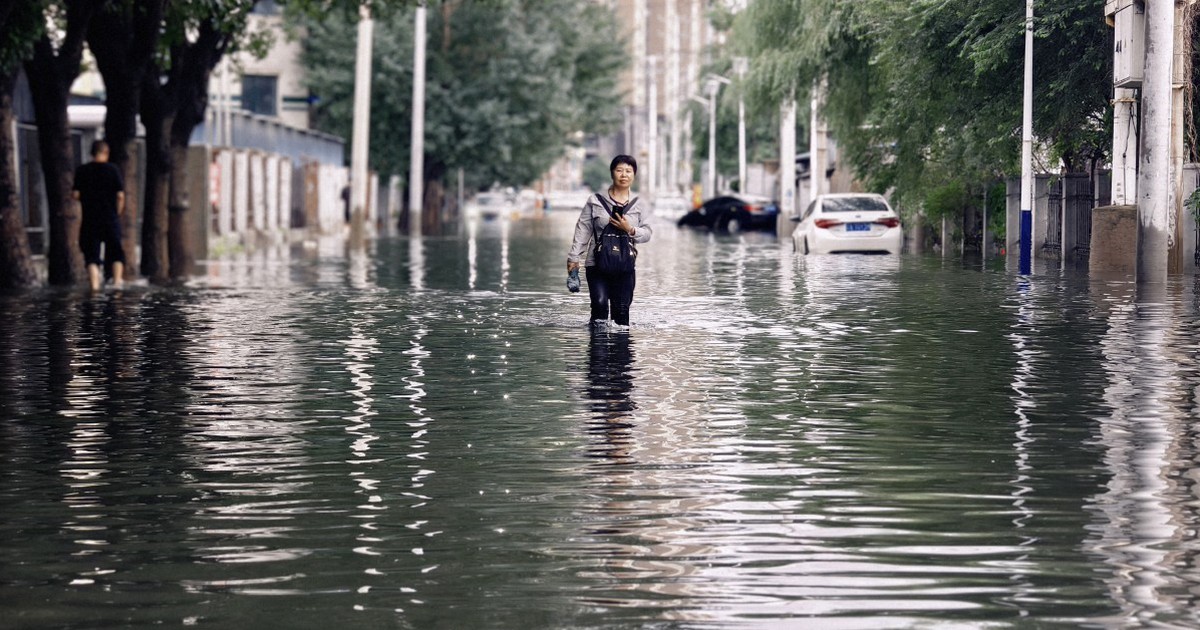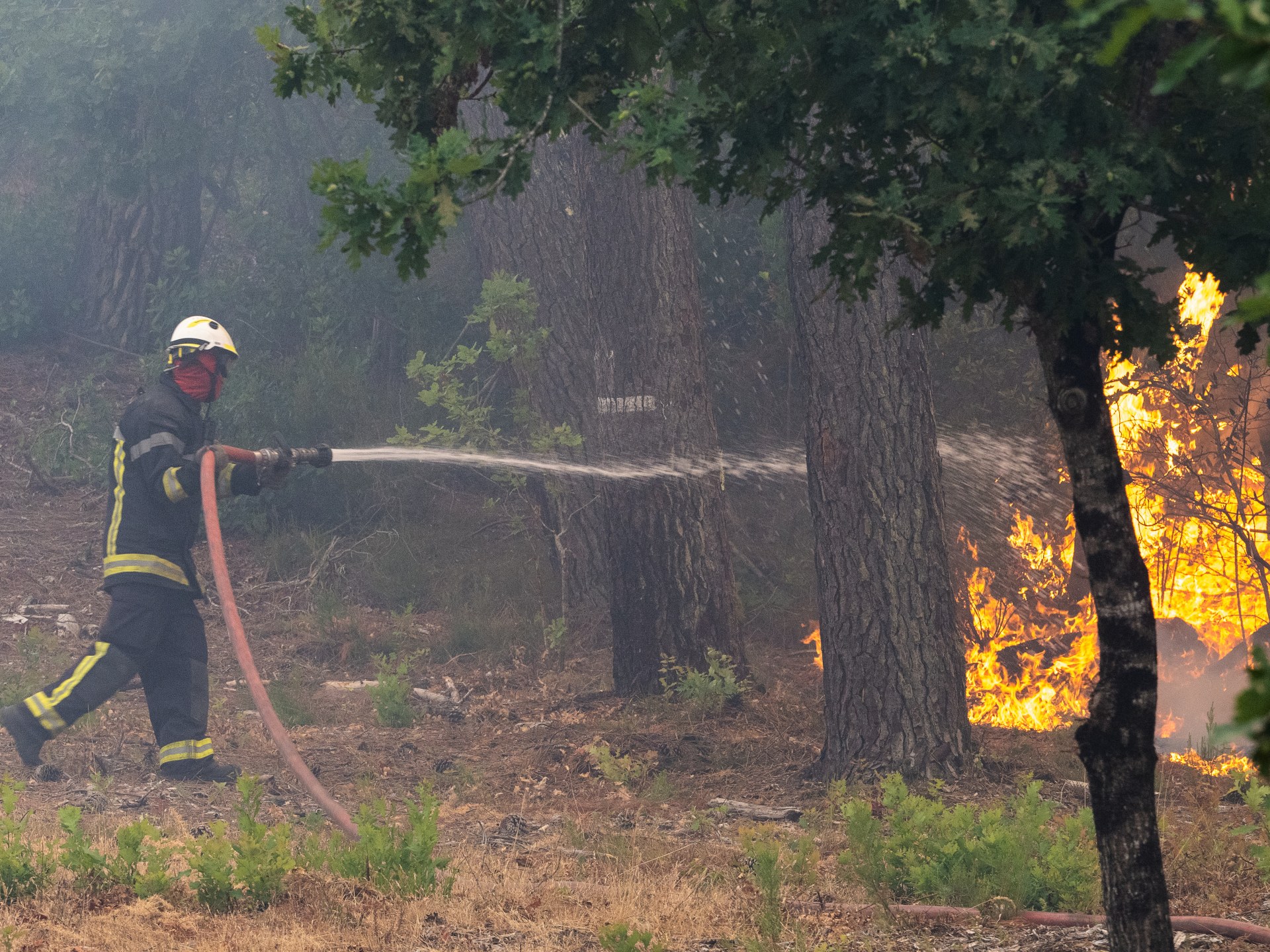
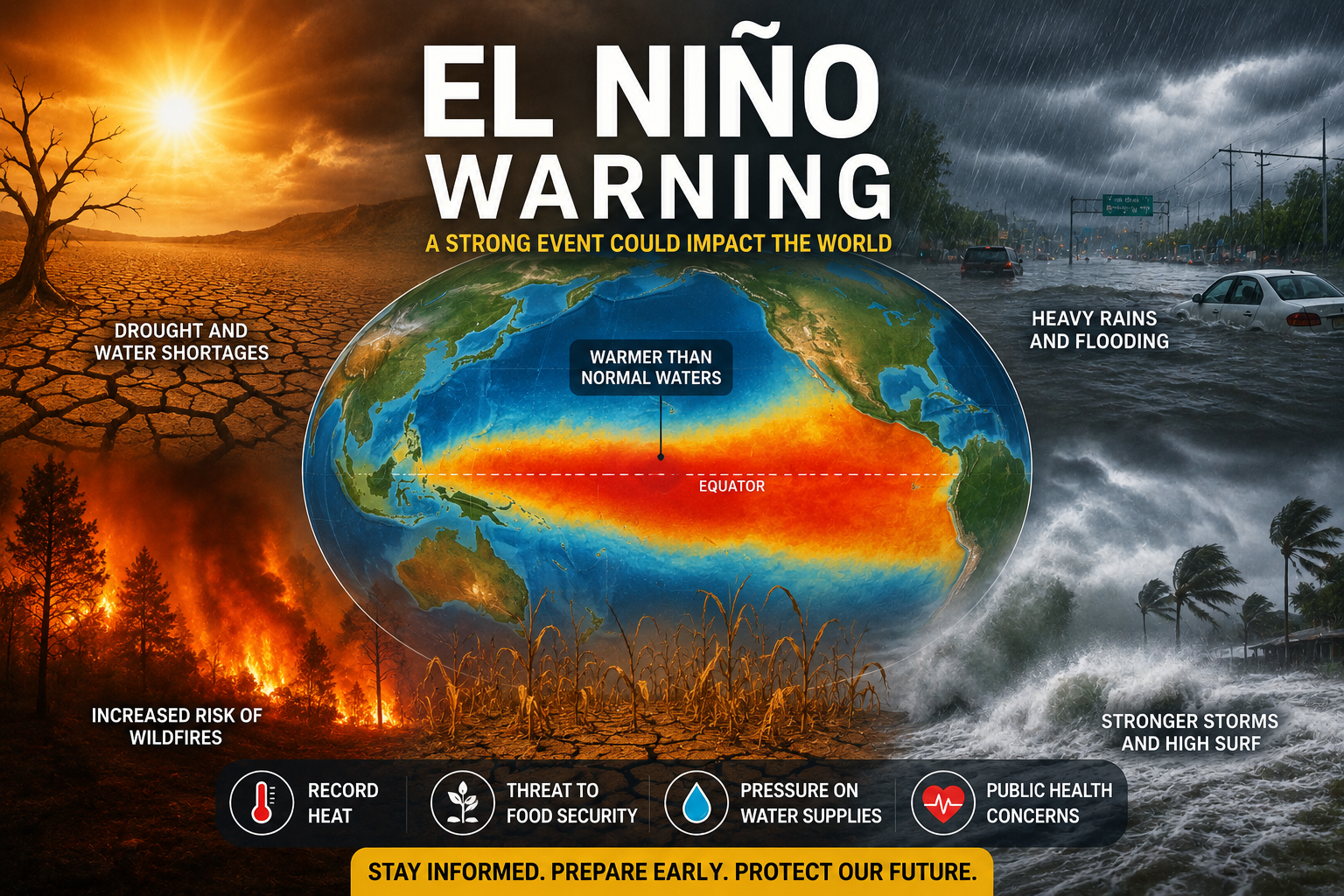
Scientists around the world are raising concerns about the possibility of an exceptionally strong El Niño event that could significantly impact global weather patterns over the coming months. Climate experts warn that this phenomenon, combined with the ongoing effects of global warming, may push temperatures to record-breaking levels and trigger more frequent extreme weather events across several continents.
El Niño is a natural climate pattern that occurs when sea surface temperatures in the central and eastern Pacific Ocean become warmer than average. Although it develops naturally every few years, its impacts can be felt worldwide. During a strong El Niño, some regions experience severe droughts and heatwaves, while others face heavy rainfall, flooding, and destructive storms.
According to climate researchers, the next major El Niño could become one of the strongest in recent history. Forecast models suggest that rising ocean temperatures may intensify its effects, increasing the likelihood of prolonged heatwaves across North America, Europe, and parts of Asia. Many countries are already preparing for hotter summers, increased wildfire risks, and growing pressure on electricity and water supplies.
Agriculture is expected to be among the sectors most affected. Farmers in drought-prone regions could face reduced crop yields due to water shortages and extreme heat. Staple crops such as rice, wheat, corn, and soybeans may suffer significant losses, potentially driving up global food prices. Meanwhile, excessive rainfall in other regions could damage farmland, disrupt transportation networks, and threaten food security.
The environmental consequences are equally concerning. Forests weakened by prolonged dry conditions become more vulnerable to wildfires, while rising ocean temperatures can cause widespread coral bleaching, threatening marine ecosystems and biodiversity. Wildlife habitats may also be disrupted as animals struggle to adapt to rapidly changing weather conditions.
Public health experts are also monitoring the situation closely. Extreme heat increases the risk of heat-related illnesses, particularly among children, older adults, and people with chronic health conditions. In addition, warmer temperatures and changing rainfall patterns can contribute to the spread of mosquito-borne diseases and place additional strain on healthcare systems.
Governments and international organizations are urging communities to prepare for potential impacts by improving water conservation, strengthening emergency response systems, and investing in climate-resilient infrastructure. Experts emphasize that while El Niño itself is a natural phenomenon, human-induced climate change is making its consequences more severe and unpredictable.
Although forecasting climate events always involves some uncertainty, scientists agree that early preparation is essential. By monitoring weather updates, conserving natural resources, and implementing effective climate adaptation strategies, countries can reduce the risks posed by extreme weather and better protect their populations.
As the world continues to experience rising global temperatures, the potential arrival of a powerful El Niño serves as another reminder of the growing challenges posed by climate change. Whether through international cooperation, scientific innovation, or local preparedness, the actions taken today will play a crucial role in determining how well societies can withstand the environmental challenges of tomorrow.